AI TL;DR
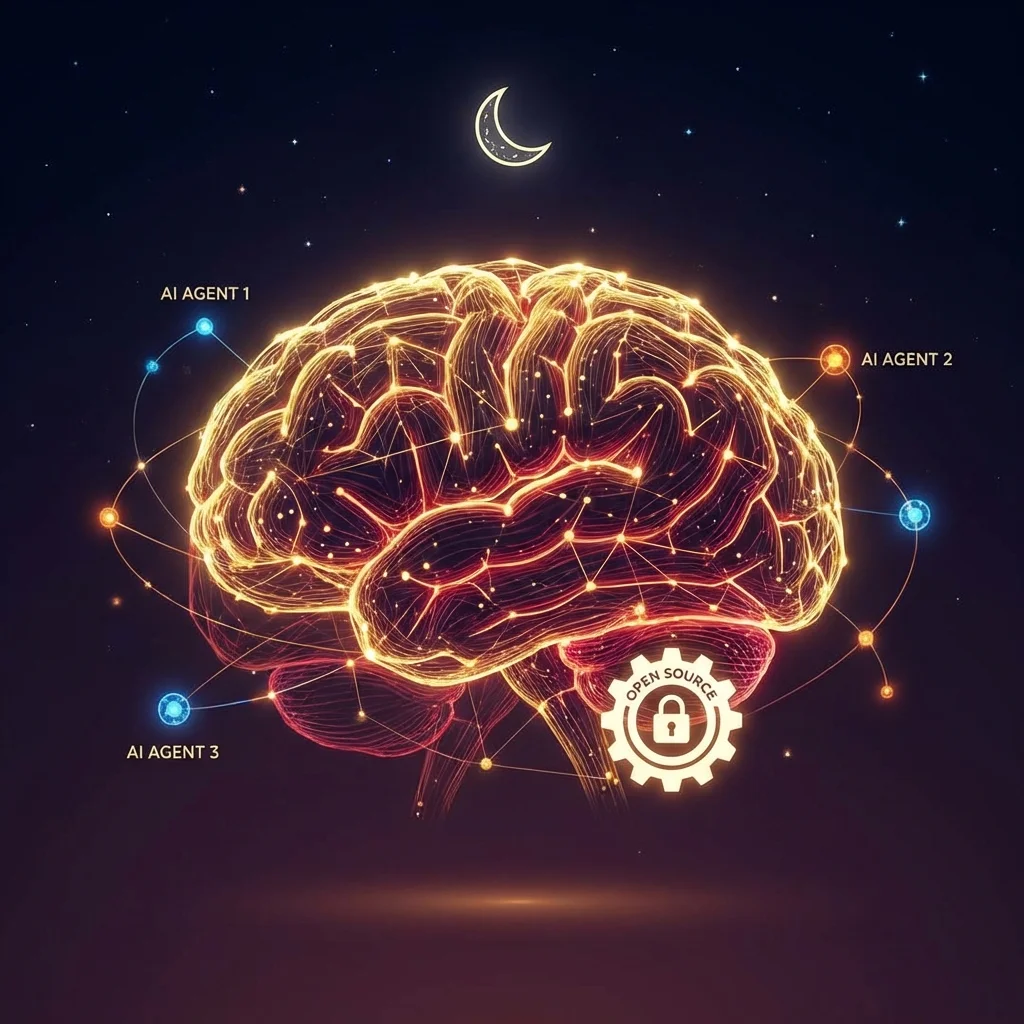
Moonshot AI's Kimi K2.5 is a 1-trillion parameter open-source model that orchestrates 100 sub-agents, excels at coding, and matches GPT-5.2 in agentic tasks. Here's our complete technical breakdown.
Kimi K2.5 Review: China's Most Powerful Open-Source Multimodal AI Model
On January 27, 2026, Chinese AI startup Moonshot AI released Kimi K2.5—now widely considered the most capable open-source multimodal model available. With a 1-trillion parameter Mixture-of-Experts architecture, the ability to orchestrate 100 parallel sub-agents, and benchmark scores matching GPT-5.2, this is a landmark moment for open-source AI.
What Makes Kimi K2.5 Special?
Kimi K2.5 isn't just another large language model. It's a multimodal agentic system that seamlessly integrates:
- Text understanding and generation
- Image and video analysis
- Code writing and debugging
- Tool use and API calling
- Multi-agent orchestration
┌────────────────────────────────────────────────────────────────────┐
│                     KIMI K2.5 ARCHITECTURE                          │
├────────────────────────────────────────────────────────────────────┤
│                                                                    │
│   ┌──────────────────────────────────────────────────────────┐    │
│   │                  INPUT PROCESSING                         │    │
│   ├────────────────┬─────────────────┬───────────────────────┤    │
│   │     Text       │     Images      │       Video           │    │
│   │   (256K ctx)   │   (MoonViT)     │   (Frame Analysis)    │    │
│   └───────┬────────┴────────┬────────┴──────────┬────────────┘    │
│           │                 │                   │                  │
│           ▼                 ▼                   ▼                  │
│   ┌────────────────────────────────────────────────────────────┐  │
│   │              MIXTURE OF EXPERTS (MoE) CORE                 │  │
│   │  ┌────────┐ ┌────────┐ ┌────────┐      ┌────────┐         │  │
│   │  │Expert 1│ │Expert 2│ │Expert 3│ ···  │Expert  │         │  │
│   │  │        │ │        │ │        │      │  384   │         │  │
│   │  └────────┘ └────────┘ └────────┘      └────────┘         │  │
│   │         32B parameters activated per token                 │  │
│   └────────────────────────────────────────────────────────────┘  │
│           │                                                        │
│           ▼                                                        │
│   ┌────────────────────────────────────────────────────────────┐  │
│   │                   AGENTIC LAYER                            │  │
│   │  ┌─────────┐  ┌─────────┐  ┌─────────┐      ┌─────────┐   │  │
│   │  │Sub-Agent│  │Sub-Agent│  │Sub-Agent│ ···  │Sub-Agent│   │  │
│   │  │    1    │  │    2    │  │    3    │      │   100   │   │  │
│   │  └─────────┘  └─────────┘  └─────────┘      └─────────┘   │  │
│   │              Up to 1,500 tool calls per task               │  │
│   └────────────────────────────────────────────────────────────┘  │
│                                                                    │
└────────────────────────────────────────────────────────────────────┘
Technical Specifications
| Specification | Value |
|---|---|
| Total Parameters | 1 Trillion |
| Active Parameters | 32 Billion (per token) |
| Architecture | Mixture of Experts (MoE) |
| Experts | 384 |
| Layers | 61 |
| Context Window | 256K tokens |
| Vision Encoder | MoonViT (400M parameters) |
| Vocabulary Size | 160K tokens |
| Training Data | 15T tokens (text + visual) |
Mixture of Experts Explained
Unlike dense models that use all parameters for every token, MoE models route tokens to specialized "experts":
# Simplified MoE routing
def forward(self, token):
    # Router selects top-k experts for this token
    expert_weights = self.router(token)
    top_experts = torch.topk(expert_weights, k=8)

    # Only 8 of 384 experts process this token
    output = sum(
        weight * expert(token)
        for weight, expert in top_experts
    )
    return output
This means Kimi K2.5's 1T parameters provide the knowledge capacity of a 1-trillion parameter model with the inference cost of a 32-billion parameter model.
Agent Swarm: 100 Parallel Sub-Agents
Kimi K2.5's most distinctive feature is its agent swarm architecture:
- Orchestrate up to 100 sub-agents simultaneously
- Execute 1,500+ tool calls per complex task
- Reduce execution time by 4.5x compared to single-agent approaches
Example: Complex Research Task
Task: "Research the top 10 AI startups of 2025, compile their funding,
       products, and team backgrounds into a structured report"

Orchestration:
  - Sub-Agent 1-10: Research individual companies
  - Sub-Agent 11-15: Verify funding data
  - Sub-Agent 16-20: Analyze product offerings
  - Sub-Agent 21-25: Compile team backgrounds
  - Sub-Agent 26: Aggregate and format final report

Parallel Execution: ~3 minutes
Sequential Execution: ~15 minutes

Speedup: 5x
Benchmark Performance
Kimi K2.5 achieves state-of-the-art results across multiple benchmarks:
Coding Benchmarks
| Benchmark | Kimi K2.5 | GPT-5.2 | Claude 4.5 Opus |
|---|---|---|---|
| HumanEval | 94.2% | 93.8% | 92.1% |
| MBPP+ | 89.7% | 88.5% | 87.2% |
| SWE-Verified | 48.3% | 46.1% | 44.8% |
Agentic Benchmarks
| Benchmark | Kimi K2.5 | GPT-5.2 | Claude 4.5 Opus |
|---|---|---|---|
| Humanity's Last Exam | 12.4% | 12.1% | 11.8% |
| BrowseComp | 67.2% | 65.8% | 64.3% |
| GAIA Level 3 | 58.9% | 57.2% | 55.6% |
Vision-to-Code Performance
Kimi K2.5 particularly excels at generating code from visual inputs:
| Task | Kimi K2.5 | GPT-5.2 Vision | Gemini 2.5 Pro |
|---|---|---|---|
| UI Screenshot → HTML | 89.3% | 84.7% | 82.1% |
| Diagram → Mermaid | 92.1% | 88.4% | 86.7% |
| Wireframe → React | 85.6% | 81.2% | 79.8% |
Front-End Development: The Killer Use Case
Moonshot AI specifically highlights Kimi K2.5's front-end development capabilities:
// Prompt: "Create a responsive dashboard with a sidebar,
// three stat cards, and a line chart"

// Kimi K2.5 generates complete, working code:
export default function Dashboard() {
  return (
    <div className="flex h-screen">
      <Sidebar />
      <main className="flex-1 p-6">
        <div className="grid grid-cols-3 gap-4 mb-6">
          <StatCard title="Revenue" value="$45,231" change="+12%" />
          <StatCard title="Users" value="2,543" change="+8%" />
          <StatCard title="Orders" value="1,234" change="+15%" />
        </div>
        <LineChart data={revenueData} />
      </main>
    </div>
  );
}
The model can:
- Generate complete React/Vue/Svelte components from descriptions
- Convert Figma-style mockups to production code
- Debug UI issues from screenshots
- Add animations and interactions from natural language
Kimi Code: The VSCode Integration
Alongside K2.5, Moonshot released Kimi Code—an open-source coding agent compatible with:
- Visual Studio Code
- Cursor
- Zed
- JetBrains IDEs (via plugin)
Installation
# VSCode Extension
code --install-extension moonshot.kimi-code

# Or via extension marketplace
Search: "Kimi Code"
Features
- Autocomplete: Context-aware code suggestions
- Chat: In-editor AI conversation
- Agent Mode: Autonomous task execution
- Vision: Paste screenshots, get code
How to Access Kimi K2.5
Option 1: Kimi.com (Consumer Interface)
Free access through the web interface at kimi.com.
Option 2: API Access
from anthropic import Anthropic  # Compatible API format

client = Anthropic(
    base_url="https://api.moonshot.ai/v1",
    api_key="your-moonshot-api-key"
)

response = client.messages.create(
    model="kimi-k2.5",
    max_tokens=4096,
    messages=[{
        "role": "user",
        "content": "Write a Python function to detect emotions in text"
    }]
)
Option 3: Self-Hosting (Open Weights)
# Hugging Face download
huggingface-cli download moonshot-ai/kimi-k2.5

# Run with vLLM
vllm serve moonshot-ai/kimi-k2.5 \
  --tensor-parallel-size 8 \
  --max-model-len 256000
Hardware Requirements: 8x H100 80GB GPUs minimum for full precision.
API Pricing
| Tier | Input (per 1M tokens) | Output (per 1M tokens) |
|---|---|---|
| Standard | $0.60 | $2.40 |
| Agentic Mode | $1.20 | $4.80 |
| Vision | $0.80 | $3.20 |
Compared to GPT-5.2 ($15/1M input, $60/1M output), Kimi K2.5 offers 25x lower pricing.
Open Source vs. Proprietary: Why It Matters
Kimi K2.5's open-source release has significant implications:
For Developers
- No Vendor Lock-in: Run on your own infrastructure
- Customization: Fine-tune for specific domains
- Privacy: Sensitive data never leaves your servers
For the Industry
- Competition: Pressures proprietary models on pricing
- Innovation: Community can extend and improve
- Access: Democratizes cutting-edge AI capabilities
For China's AI Ecosystem
- Independence: Reduces reliance on Western APIs
- Ecosystem Building: Attracts developers to Chinese platforms
- Geopolitical Strategy: Soft power through open technology
Limitations and Considerations
Despite impressive benchmarks, Kimi K2.5 has constraints:
- Hardware Requirements: Self-hosting requires significant GPU resources
- English-Chinese Bias: Strongest in these languages, weaker in others
- API Reliability: Moonshot's infrastructure less proven than OpenAI/Anthropic
- Safety Guardrails: Less robust than Western models in some areas
- Context Degradation: Quality drops toward the end of very long contexts
The Competitive Landscape
| Model | Parameters | Open Source | Context | Agentic | Pricing |
|---|---|---|---|---|---|
| Kimi K2.5 | 1T (32B active) | ✅ Yes | 256K | ✅ 100 agents | $0.60/$2.40 |
| GPT-5.2 | Unknown | ❌ No | 128K | ✅ Limited | $15/$60 |
| Claude 4.5 Opus | Unknown | ❌ No | 200K | ✅ Yes | $15/$75 |
| Gemini 2.5 Pro | Unknown | ❌ No | 2M | 🔄 Partial | $7/$21 |
| Llama 4 | 400B | ✅ Yes | 128K | ❌ No | Free |
Final Verdict
Kimi K2.5 represents a watershed moment for open-source AI. Its combination of:
- Trillion-parameter scale
- Multimodal capabilities
- Agent swarm architecture
- Competitive benchmark scores
- Open weights
...makes it the most capable open-source model available today.
Rating: 4.8/5 ⭐
A genuine alternative to proprietary models for teams with GPU resources. The open-source AI future is here.
Related Reading
- Multi-Agent AI Systems Explained 2026
- The Rise of Agentic AI 2026
- Local AI on Mac 2026: Complete Guide
Running Kimi K2.5 locally or via API? Share your benchmarks and use cases in the comments.