AI TL;DR
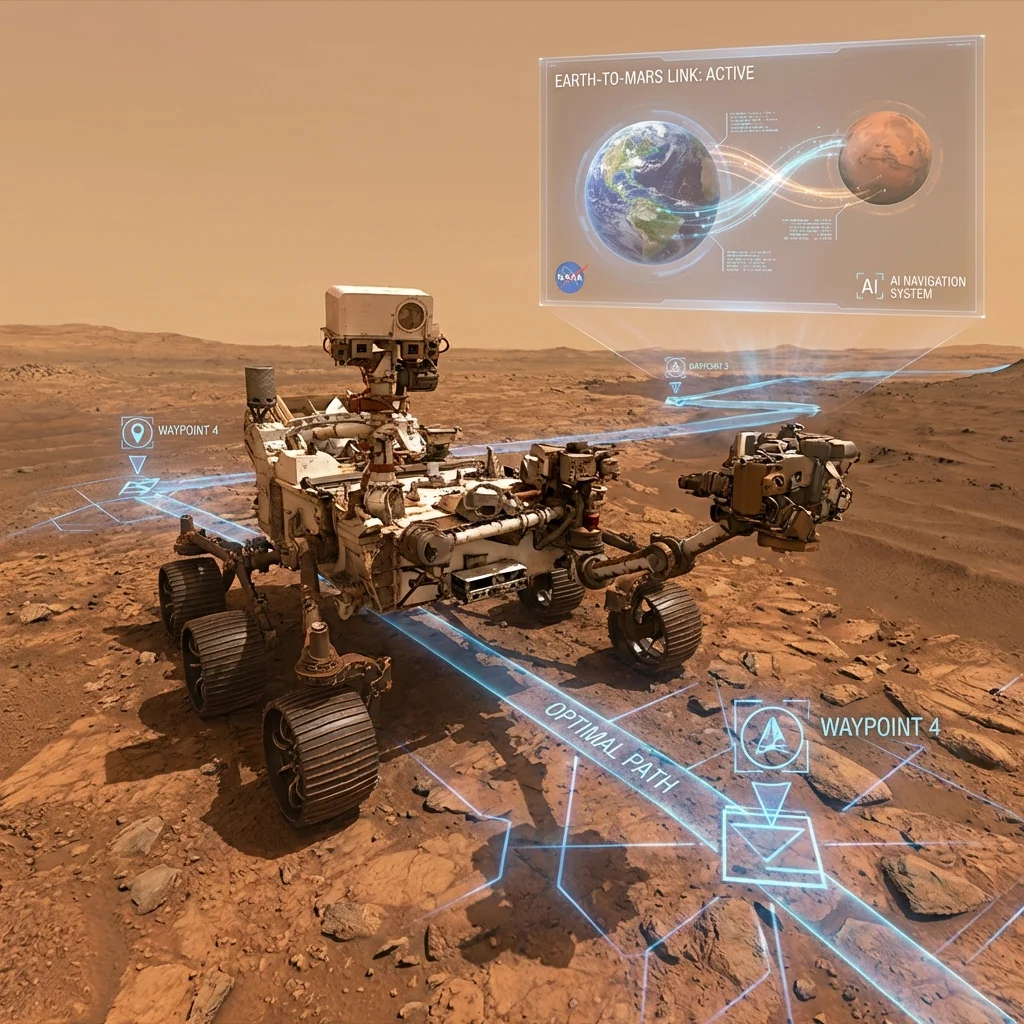
NASA's Perseverance rover completed 400+ meters of autonomous drives on Mars in December 2025—routes planned entirely by Anthropic's Claude AI. This is the first time a generative AI has commanded a planetary rover.
Claude Helps NASA Plan Mars Rover Drives: First AI-Planned Space Mission
In December 2025, history was quietly made on Mars. NASA's Perseverance rover completed two autonomous drives—totaling over 400 meters—using routes planned entirely by Anthropic's Claude AI. This marks the first time a generative AI system has planned and commanded a rover's movements on another planet.
What Happened
On December 8 and 10, 2025, Perseverance executed drives through the Jezero Crater using coordinates generated by Claude:
| Date | Distance | Terrain | Result |
|---|---|---|---|
| December 8, 2025 | ~200m | Rocky outcrop region | ✅ Success |
| December 10, 2025 | ~200m+ | Sandy ripple field | ✅ Success |
The AI analyzed orbital imagery, identified safe paths, and generated commands in NASA's rover programming language—all with minimal human intervention.
How It Works
┌────────────────────────────────────────────────────────────────────┐
│              CLAUDE-POWERED MARS ROUTE PLANNING                     │
├────────────────────────────────────────────────────────────────────┤
│                                                                    │
│   ┌──────────────────────────────────────────────────────────┐    │
│   │                    DATA INPUTS                            │    │
│   ├────────────────────────┬─────────────────────────────────┤    │
│   │   HiRISE Orbital       │   Digital Elevation             │    │
│   │   Imagery (MRO)        │   Model (terrain slopes)        │    │
│   └───────────┬────────────┴──────────────┬──────────────────┘    │
│               │                           │                        │
│               ▼                           ▼                        │
│   ┌────────────────────────────────────────────────────────────┐  │
│   │                    CLAUDE ANALYSIS                         │  │
│   │                                                            │  │
│   │   1. Identify terrain features:                            │  │
│   │      - Bedrock (safe)                                      │  │
│   │      - Boulder fields (hazard)                             │  │
│   │      - Sand ripples (traversable with caution)             │  │
│   │      - Outcrops (scientific interest)                      │  │
│   │                                                            │  │
│   │   2. Generate continuous path with waypoints               │  │
│   │                                                            │  │
│   │   3. Output Rover Markup Language (RML) commands           │  │
│   └────────────────────────────────────────────────────────────┘  │
│               │                                                    │
│               ▼                                                    │
│   ┌────────────────────────────────────────────────────────────┐  │
│   │                    JPL VERIFICATION                        │  │
│   │                                                            │  │
│   │   • "Digital twin" simulation                              │  │
│   │   • 500,000+ telemetry variables checked                   │  │
│   │   • Flight software compatibility                          │  │
│   │   • Safety margin validation                               │  │
│   └────────────────────────────────────────────────────────────┘  │
│               │                                                    │
│               ▼                                                    │
│   ┌────────────────────────────────────────────────────────────┐  │
│   │                    MARS EXECUTION                          │  │
│   │                                                            │  │
│   │   Perseverance follows AI-planned route                    │  │
│   │   ~20 minute communication delay (Earth to Mars)           │  │
│   └────────────────────────────────────────────────────────────┘  │
│                                                                    │
└────────────────────────────────────────────────────────────────────┘
The Data Pipeline
Claude received:
- HiRISE Imagery: High-resolution photos from NASA's Mars Reconnaissance Orbiter
- Elevation Models: 3D terrain data showing slopes and gradients
- Previous Drive Data: Historical routes for context
Terrain Analysis
The AI identified critical features visible from orbit:
| Feature | Risk Level | AI Action |
|---|---|---|
| Flat bedrock | ✅ Low | Direct routing |
| Rocky outcrops | 🟡 Medium | Navigate around edges |
| Boulder fields | 🔴 High | Avoid entirely |
| Sand ripples | 🟡 Medium | Cross at angles |
Command Generation
Claude output commands in Rover Markup Language (RML), an XML-based format:
<drive_sequence id="dec8_2025">
  <waypoint>
    <coordinates>18.4385, 77.4508</coordinates>
    <expected_duration_min>8</expected_duration_min>
    <terrain_type>bedrock</terrain_type>
  </waypoint>
  <waypoint>
    <coordinates>18.4387, 77.4512</coordinates>
    <expected_duration_min>12</expected_duration_min>
    <terrain_type>sand_ripple</terrain_type>
    <approach_angle>45</approach_angle>
  </waypoint>
  <!-- Additional waypoints -->
</drive_sequence>
Human Verification
Despite AI planning, humans remained in the loop:
Digital Twin Testing
Before transmitting to Mars, JPL engineers:
- Ran commands through a digital twin of Perseverance
- Analyzed 500,000+ telemetry variables
- Verified compatibility with flight software
- Confirmed safety margins met standards
Minor Adjustments
In some cases, engineers made small modifications:
"Details only visible in ground-level images sometimes required adjustments. But the AI-generated routes were fundamentally sound and worked reliably." — NASA JPL statement
Why This Matters
1. Efficiency Gains
Traditional route planning takes hours of human time. With Claude:
| Aspect | Traditional | With Claude |
|---|---|---|
| Planning Time | 4-6 hours | 30-60 minutes |
| Human Specialists | 3-5 needed | 1 for verification |
| Iterations | Manual adjustments | AI refinement |
"Using Claude for future Martian route planning could halve the time required for this task." — NASA JPL engineers
2. Enabling Ambitious Missions
Deep space communication delays limit human control:
| Destination | One-Way Light Delay | Impact |
|---|---|---|
| Moon | 1.3 seconds | Minor |
| Mars | 4-24 minutes | Significant |
| Jupiter moons | 33-53 minutes | Severe |
| Saturn moons | 69-90 minutes | Extreme |
For missions beyond Mars, autonomous AI planning becomes essential.
3. Scientific Productivity
More efficient navigation means:
- More time for science
- More ground covered per mission
- Reduced operational costs
The Technology Behind It
Why Claude?
NASA selected Claude for several reasons:
- Long Context: Can process extensive terrain data
- Instruction Following: Generates precise, formatted outputs
- Reasoning: Can explain decisions for human review
- Safety: Conservative by default—avoids risky paths
Custom Training?
NASA worked with Anthropic to ensure Claude understood:
- Mars terrain classification
- Rover capabilities and limitations
- RML syntax and constraints
- Mission safety requirements
Official Statements
Jared Isaacman, NASA Administrator:
"Autonomous technologies like this can help missions operate more efficiently, respond to challenging terrain, and increase scientific returns."
Anthropic Blog:
"We're honored that Claude could contribute to space exploration. This demonstrates how AI assistants can support human experts in high-stakes, complex domains."
Future Implications
For Mars Exploration
- Mars Sample Return: AI planning for complex retrieval missions
- Human Mars Missions: Prep work before astronaut arrival
- Extended Operations: Reduce need for 24/7 human monitoring
For Other Missions
- Lunar Gateway: Autonomous supply deliveries
- Europa Clipper: Route planning in Jupiter orbit
- Asteroid Missions: Navigation in microgravity
For AI Development
This represents AI systems being trusted in genuinely high-stakes, irreversible situations:
| Domain | Risk of Failure | AI Role |
|---|---|---|
| Customer Service | Low | Common |
| Medical Diagnosis | Medium | Growing |
| Autonomous Vehicles | High | Advancing |
| Planetary Exploration | Extreme | Now proven |
Limitations and Caveats
What Claude Can't Replace
- Scientific Decisions: Which rocks to sample, where to search for life
- Emergency Response: Real-time hazard avoidance still onboard
- Mission Strategy: Overall goals set by humans
- Hardware Control: Direct actuator commands managed by flight software
Data Dependencies
Claude's planning quality depends on available data:
- Orbital imagery resolution
- Terrain model accuracy
- Historical drive performance
Ground-level surprises—an unexpectedly soft sand patch, a hidden rock—still require onboard autonomy.
Conclusion
The December 2025 Mars drives represent a watershed moment for AI in space exploration. For the first time, a generative AI planned routes that a planetary rover actually followed—successfully.
This isn't about replacing human expertise. It's about augmenting it: letting AI handle time-consuming planning while humans focus on scientific discovery and strategic decisions.
As missions venture farther from Earth—to Europa, Titan, and beyond—AI planning won't be optional. The Mars demonstration proves it works.
Related Reading
What space mission would you like to see AI assist with next? Share your thoughts below.