AI TL;DR
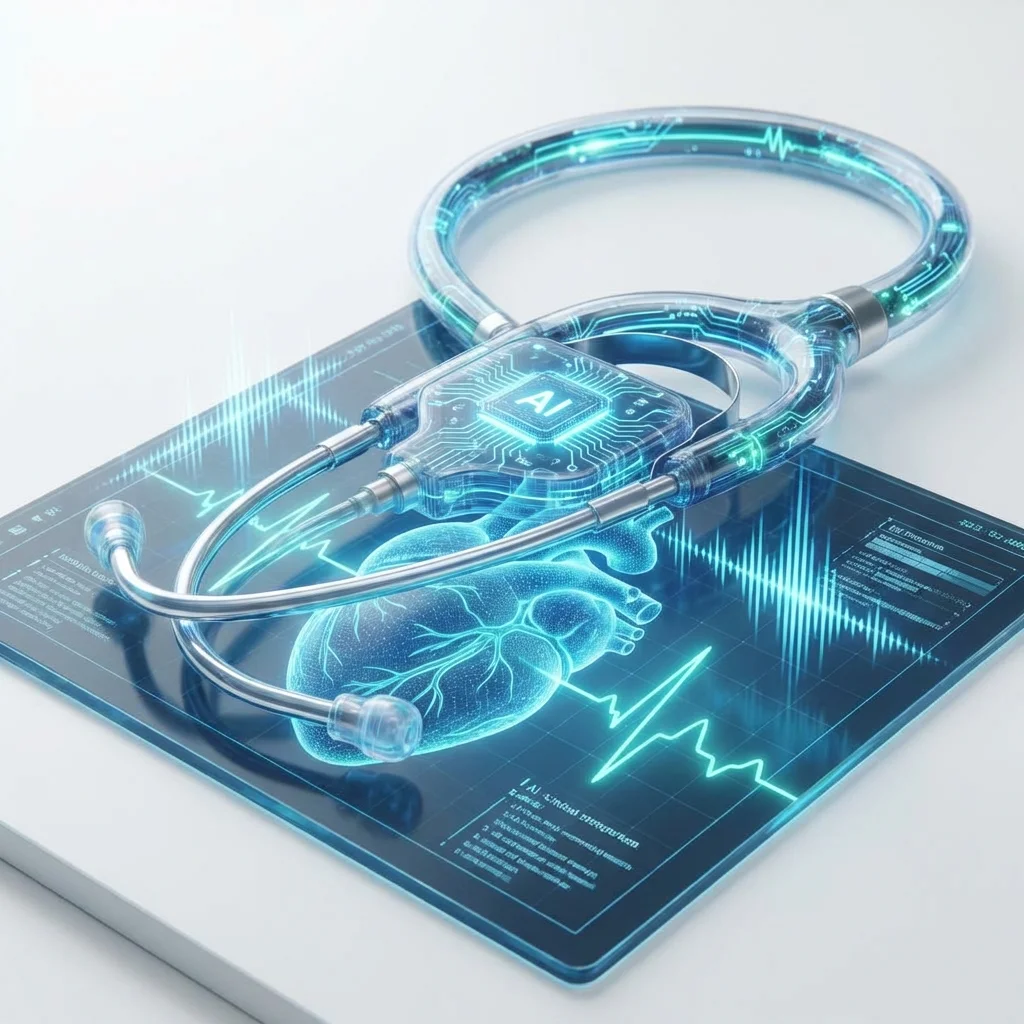
A groundbreaking study shows AI-enabled digital stethoscopes achieve 92.3% sensitivity for valvular heart disease, compared to 46.2% for traditional stethoscopes.
A Revolution in Heart Disease Detection
A study published on February 5, 2026, in the European Heart Journal - Digital Health reveals that AI-powered digital stethoscopes can detect heart valve problems more than twice as effectively as traditional stethoscopes used by doctors.
This isn't a marginal improvement—it's a transformation that could save countless lives by catching heart disease before it becomes life-threatening.
The Numbers That Matter
| Detection Method | Sensitivity |
|---|---|
| AI-enabled stethoscope | 92.3% |
| Traditional stethoscope | 46.2% |
That means AI catches almost all cases of moderate to severe valvular heart disease, while traditional methods miss more than half.
Why This Matters
The Silent Killer
Valvular heart disease often goes undetected because:
- Symptoms can be subtle or absent
- Heart murmurs are difficult to distinguish
- Many patients don't see specialists
- Routine exams often miss early signs
The Consequences of Missing It
When heart valve problems go undiagnosed:
- Progressive heart damage
- Increased risk of heart failure
- Reduced quality of life
- Higher mortality rates
How AI Stethoscopes Work
The Technology
AI-enabled digital stethoscopes combine:
- High-quality digital audio: Crystal-clear heart sound recordings
- Machine learning algorithms: Pattern recognition trained on thousands of heart sounds
- Real-time analysis: Instant results during examination
- Clinical decision support: Recommendations for further testing
What They Detect
Modern AI stethoscopes can identify:
- Heart valve abnormalities (stenosis, regurgitation)
- Heart murmurs
- Irregular heart rhythms (arrhythmias)
- Signs of heart failure
The Key Studies
European Heart Journal Study (February 5, 2026)
- Population: 357 patients over 50 with heart disease risk factors
- Location: United States
- Finding: AI stethoscope detected moderate to severe valvular disease with 92.3% sensitivity
- Impact: Patients could receive faster diagnoses and treatment
TRICORDER Trial (February 3, 2026)
Published in The Lancet, this large NHS study found:
- AI stethoscopes help GPs detect serious heart conditions faster
- Doctors using AI diagnosed valve disease more frequently and earlier
- Key caveat: Consistent and correct use is crucial for effectiveness
FDA-Cleared AI Stethoscope Solutions
eMurmur Heart AI
- Cleared: January 29, 2026
- Capability: Detects presence and absence of heart murmurs
- Bonus: Provides hemodynamic data from recordings
Eko Health
- Status: FDA cleared
- Performance: Comparable to echocardiography for structural heart disease
- Use case: High-sensitivity detection of valvular abnormalities
The Clinical Workflow
Before AI Stethoscopes
- Doctor examines patient with traditional stethoscope
- Heart murmur may or may not be detected (~46% detection rate)
- Symptoms may be dismissed or monitored
- Diagnosis often delayed until symptoms worsen
- Patient referred for echocardiogram only if suspicion is high
With AI Stethoscopes
- Doctor uses AI-enabled digital stethoscope
- AI analyzes heart sounds in real-time
- Algorithm flags potential valve problems (~92% detection rate)
- Immediate recommendation for echocardiogram if needed
- Earlier diagnosis and intervention
Benefits for Healthcare Systems
For Patients
- Earlier detection of heart problems
- Faster access to treatment
- Better outcomes from timely intervention
- Peace of mind from accurate screening
For Doctors
- Decision support for primary care physicians
- Reduced risk of missed diagnoses
- More confidence in referral decisions
- Efficient screening during routine visits
For Healthcare Systems
- Earlier intervention reduces costly late-stage treatments
- Fewer emergency hospitalizations
- Better allocation of specialist resources
- Potential for widespread screening programs
The Speed Advantage
Earlier research from August 2025 showed AI stethoscopes can detect:
- Heart failure
- Heart valve disease
- Abnormal heart rhythms
...all in as little as 15 seconds.
What's Next
Monitoring Applications
Researchers suggest AI could also monitor patients with moderate heart valve disease, potentially:
- Reducing frequency of specialist visits
- Catching deterioration early
- Easing burden on cardiology departments
Expanded Use Cases
Future developments may include:
- Home monitoring devices for at-risk patients
- Integration with telemedicine platforms
- Wearable continuous monitoring
- AI-powered screening in pharmacies and clinics
Who Can Use AI Stethoscopes?
Current Adopters
- Cardiologists
- General practitioners
- Emergency department physicians
- Internists
- Nurse practitioners
Potential Future Users
- Paramedics and EMTs
- Pharmacists
- Community health workers
- Patients themselves (home devices)
The Accuracy Comparison
| Metric | AI Stethoscope | Traditional | Improvement |
|---|---|---|---|
| Sensitivity | 92.3% | 46.2% | 2x better |
| Detection speed | 15 seconds | Variable | Much faster |
| Consistency | High | Variable by skill | More reliable |
Challenges and Considerations
Need for Proper Use
The TRICORDER trial emphasized that AI stethoscopes work best when used consistently and correctly. Doctors who rushed or skipped the AI analysis showed lower detection rates.
Integration with Clinical Practice
- Training required for proper device use
- Workflow adjustments needed
- Cost considerations for practices
- Data privacy and security compliance
Not a Replacement
AI stethoscopes enhance—not replace—clinical judgment. They're decision support tools that help doctors make better-informed decisions.
Key Takeaways
| Aspect | Details |
|---|---|
| Improvement | 2x better detection than traditional |
| Sensitivity | 92.3% for valvular heart disease |
| Speed | Results in 15 seconds |
| Key Study | European Heart Journal, Feb 5, 2026 |
| FDA Status | Multiple devices cleared |
Conclusion
AI-enabled digital stethoscopes represent a genuine breakthrough in cardiac care. With detection rates more than double traditional methods, these tools could catch heart valve problems before they become life-threatening emergencies.
As AI stethoscopes become more widely adopted, millions of patients could benefit from earlier diagnosis and better outcomes. The technology is here, it's proven, and it's ready for clinical practice.
Sources: European Heart Journal - Digital Health, The Lancet (TRICORDER Trial), European Society of Cardiology, February 2026