AI TL;DR
While everyone else builds bigger single models, xAI launched Grok 4.2 with native multi-agent architecture. Here's what makes their approach different—and whether it works.
Grok 4.2 and xAI's Multi-Agent Architecture: Musk's Bet on a Different AI Future
xAI just dropped Grok 4.2 beta—and rather than playing the "our benchmark scores are bigger than yours" game, they took a fundamentally different approach: native multi-agent architecture. While OpenAI builds bigger monolithic models and Anthropic focuses on tool use, xAI is betting that the future of AI is teams of specialized agents working together.
Let's examine what Grok 4.2 actually brings to the table.
The Multi-Agent Architecture
How It's Different
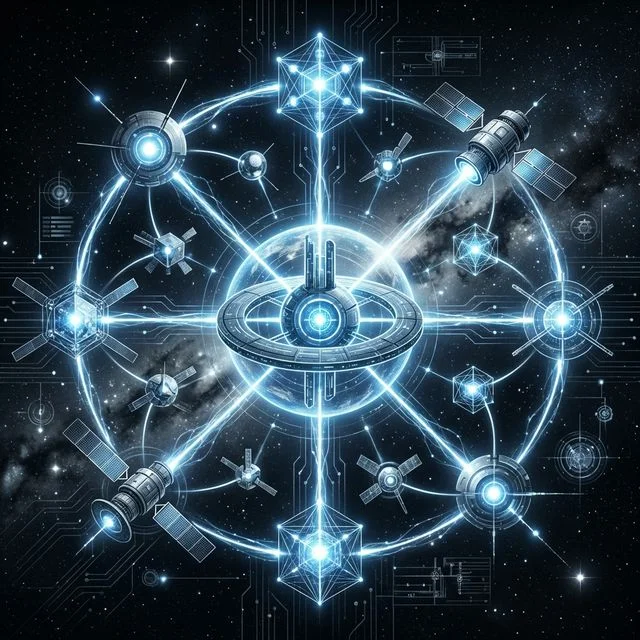
Most AI models today are monolithic: one large model handles everything, from coding to creative writing to math. Grok 4.2's multi-agent approach instead uses specialized sub-agents that collaborate:
| Approach | Traditional (GPT-5, Claude) | Grok 4.2 Multi-Agent |
|---|---|---|
| Architecture | Single large model | Multiple specialized agents |
| Task handling | One model does everything | Agents route to specialists |
| Coordination | N/A | Orchestrator agent manages flow |
| Specialization | General-purpose | Task-specific expertise |
| Scaling | Make the model bigger | Add more specialized agents |
How It Works in Practice
When you give Grok 4.2 a complex request, it doesn't just process it with one model:
- Orchestrator agent analyzes the request and decomposes it into sub-tasks
- Specialized agents handle their assigned sub-tasks concurrently
- Synthesis agent combines results into a coherent output
- Verification agent checks for consistency and quality
For example, "Write a marketing plan for a new fitness app" might route to:
- A market research agent for competitive analysis
- A strategy agent for positioning and messaging
- A financial agent for budget allocation
- A creative agent for campaign concepts
Why This Could Be Better
Deeper specialization: Each agent can be optimized for its specific task rather than being a jack-of-all-trades.
Parallel processing: Multiple agents work simultaneously, potentially faster than a single model reasoning sequentially.
Easier improvement: You can upgrade individual agents without retraining the entire system.
More transparent: You can see which agent handled which part of the response.
The xAI Ecosystem
X/Twitter Integration
Grok's biggest advantage remains its deep integration with X (formerly Twitter):
- Real-time data: Access to X's firehose of current information
- Trend analysis: Understanding what's happening right now
- Sentiment analysis: Reading the pulse of public discourse
- Content creation: Optimized for social media content
xAI Colossus
xAI's massive Colossus computing cluster provides the raw power for the multi-agent system. Elon Musk has invested billions in compute infrastructure specifically for Grok's training and inference.
Grok 4.2 vs. The Competition
Strengths
- Real-time information: Better access to current events than competitors
- Multi-agent coordination: Potentially better for complex, multi-faceted tasks
- Humor and personality: Grok has a distinctive, less filtered personality
- X integration: Unmatched for social media analysis and content
Weaknesses
- Benchmark scores: Grok 4.2 hasn't posted leading scores on standard benchmarks
- Enterprise features: Lags behind OpenAI and Anthropic in enterprise adoption
- Developer ecosystem: Smaller community and fewer integrations
- Reliability concerns: Musk's controversial leadership creates uncertainty
- Content policies: Less filtered than competitors, which creates both appeal and risk
Comparison Table
| Feature | Grok 4.2 | GPT-5.2 | Claude Opus 4.6 | Gemini 3.1 Pro |
|---|---|---|---|---|
| Architecture | Multi-agent | Monolithic | Monolithic | Monolithic |
| Real-time data | ✅ (X firehose) | Limited | Limited | ✅ (Google Search) |
| Context window | Large | 128K | 1M (beta) | 1M |
| Computer use | ❌ | ❌ | ✅ | ❌ |
| Enterprise-ready | Limited | ✅ Mature | ✅ Mature | ✅ Mature |
| Open-source | Partial | ❌ | ❌ | ❌ |
| Personality | Distinctive | Neutral | Thoughtful | Neutral |
The Multi-Agent Thesis
Why xAI Might Be Right
The monolithic model approach has a scaling problem: making models bigger gets exponentially more expensive with diminishing returns. Multi-agent architectures could be:
- More efficient: Specialized agents are smaller and cheaper individually
- More capable: Deep expertise in each domain rather than shallow breadth
- More flexible: Add new agents for new capabilities without retraining everything
- More scalable: Scale specific agents based on demand
Why xAI Might Be Wrong
- Coordination overhead: Managing communication between agents adds complexity and latency
- Error propagation: Mistakes by one agent can cascade through the system
- Proven track record: Monolithic models keep getting better faster than predicted
- Simplicity: Single models are easier to deploy, debug, and maintain
Who Should Try Grok 4.2
Good Candidates
- Social media professionals who need real-time trend analysis
- Researchers who want multi-perspective analysis of complex topics
- Content creators who value personality and less filtered responses
- Experimenters interested in multi-agent AI architectures
- X/Twitter power users who want deep platform integration
Not Ideal For
- Enterprise deployments requiring mature governance and support
- Developers needing extensive API ecosystem and documentation
- Risk-averse organizations concerned about brand association
- Privacy-focused users concerned about X data practices
The Bottom Line
Grok 4.2's multi-agent architecture is genuinely interesting from a technical perspective. Whether "teams of AI agents" outperform "one really smart AI" is one of the most important architectural questions in AI right now.
xAI is making a contrarian bet that the answer is "teams." If they're right, Grok's architecture becomes the template for next-generation AI systems. If they're wrong, it becomes an interesting experiment that validated the monolithic approach.
Either way, having a major player take a fundamentally different approach is good for the entire AI ecosystem. Competition through architectural innovation—not just throwing more compute at bigger models—is exactly what the industry needs.