AI TL;DR
With Harvard studies showing 2x learning gains, AI tutors like Khanmigo and MagicSchool are transforming classrooms. Here's what parents and teachers need to know.
AI in Education 2026: How Students Are Boosting Test Scores with AI
In 2023, schools banned ChatGPT. In 2026, they are assigning it.
Reviewing the state of EdTech in January 2026 reveals a complete paradigm shift. Artificial Intelligence isn't just a homework helper; it's becoming the primary engine for personalized learning.
A landmark Harvard study published this year found that students using active AI tutoring achieved learning gains more than double those of students in traditional active learning classrooms.
The 2026 Landscape: By The Numbers
- 86% of students globally now use AI tools weekly.
- 60% of teachers use AI for lesson planning and grading.
- 2x improvement in learning retention with AI tutors (Harvard).
- $7.5B market size for AI education tools, projected to hit $112B by 2034.
The Rise of the "Super-Tutor"
The "blooms 2-sigma problem"—the fact that 1-on-1 tutoring is vastly superior to classroom instruction but too expensive to scale—has effectively been solved by AI.
Leading AI Tutors in 2026
| Tool | Focus Area | Key Feature |
|---|---|---|
| Khanmigo | Math & Science | Socratic questioning (never gives the answer) |
| Amira | Reading & Literacy | Listens to students read aloud and corrects phonics |
| Plaito | Writing & Debate | Coaches essay structure and critical thinking |
| Querium | STEM | Step-by-step math problem solving |
Unlike early chatbots, these tools engage in Socratic dialogue. Khanmigo won't write an essay for a student; it will ask, "What is your thesis statement?" and guide them through refining it.
Personalized Learning Paths
Classrooms are moving away from "one size fits all."
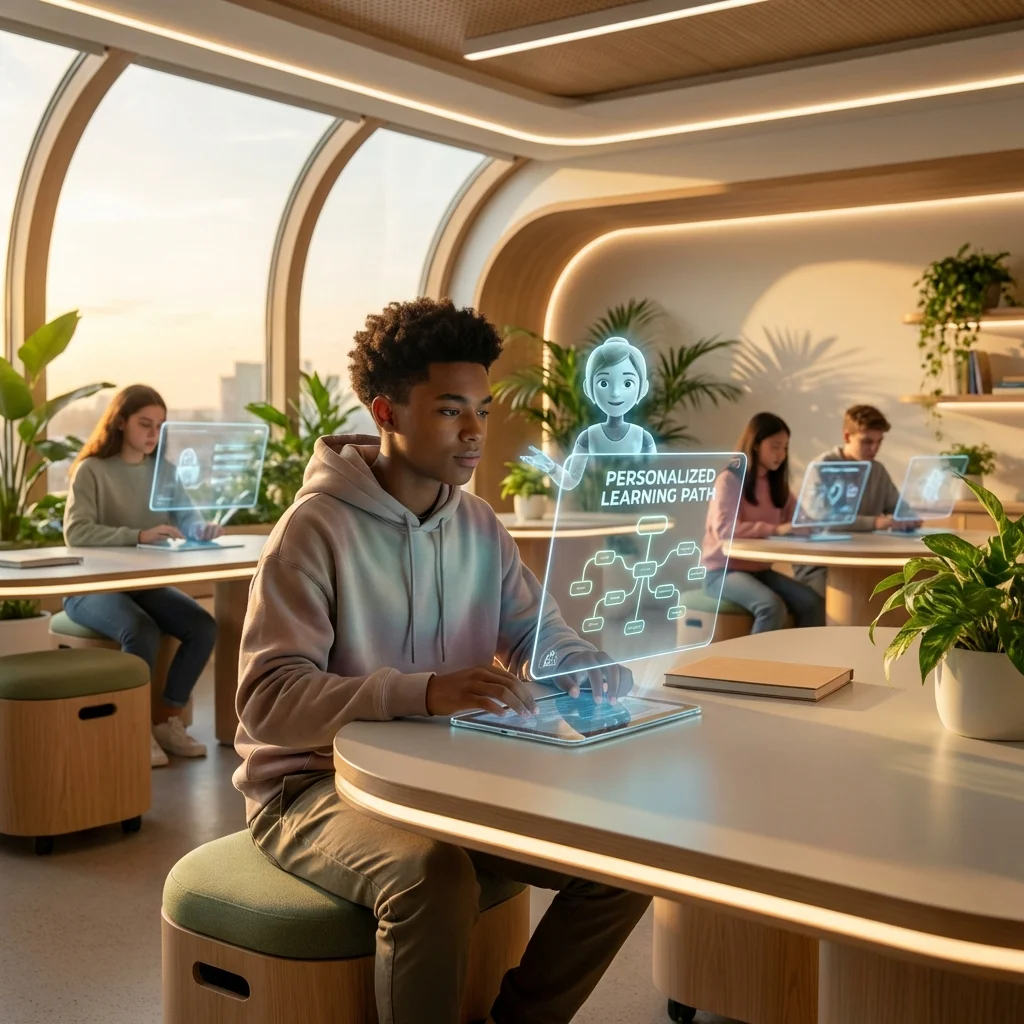
AI platforms like Century Tech and Knewton now create dynamic knowledge graphs for every student. If a student struggles with quadratic equations, the system detects missing foundational concepts (like factoring) and seamlessly inserts remedial mini-lessons before moving forward.
"It's like having a dedicated teacher for every single student, available 24/7, who never gets tired or frustrated." — Dr. Sarah Chen, EdTech Researcher
Teachers: From Content Delivery to Mentorship
Far from replacing teachers, AI is liberating them. Tools like MagicSchool AI and Eduaide.ai are automating the administrative burnout that drives teachers from the profession.
What AI handles:
- Grading quizzes instantly
- Generating lesson plans aligned to state standards
- Writing parent emails and newsletters
- Differentiating reading materials for different reading levels
What Teachers handle:
- Mentorship and emotional support
- Facilitating complex group projects
- Critical thinking and ethics discussions
- Hands-on labs and activities
The New "Cheating" vs. "Collaborating"
The definition of academic integrity has evolved.
In 2026, "cheating" isn't using AI—it's using AI lazily. Educators are now teaching AI Literacy:
- Prompt Engineering: How to ask better questions.
- Verification: How to fact-check AI hallucinations (using tools like Consensus).
- Iteration: Using AI for feedback loops, not final products.
Top Tools for Students in 2026
- NotebookLM (Google): The ultimate study buddy. Upload 50 PDFs, and it acts as an expert on your specific course material.
- Consensus: For finding peer-reviewed research papers to back up arguments.
- Otter.ai: For transcribing lectures and summarizing key points automatically.
- Quizlet Q-Chat: An adaptive AI quiz partner that tests you on your weak points.
Conclusion
The fear that AI would make students "dumber" is being disproven by data. When used as a tutor rather than a crutch, AI is helping students learn faster, retain more, and tackle more complex subjects than ever before.
For parents and educators, the goal in 2026 is clear: Don't block the AI. Guide the collaboration.
Related articles: