AI TL;DR
After reviewing hundreds of prompts, I keep seeing the same mistakes. Here's what separates okay results from great ones. This article explores key trends in AI, offering actionable insights and prompts to enhance your workflow. Read on to master these new tools.
Why Your AI Prompts Suck (And How to Fix Them)
I'm going to be direct: most people use AI like they're texting a friend, then get frustrated when the results are mediocre. The AI isn't the problem—it's how you're talking to it.
Here's what I've learned from writing thousands of prompts and seeing what actually produces great results.
Mistake #1: Being Vague About What You Want
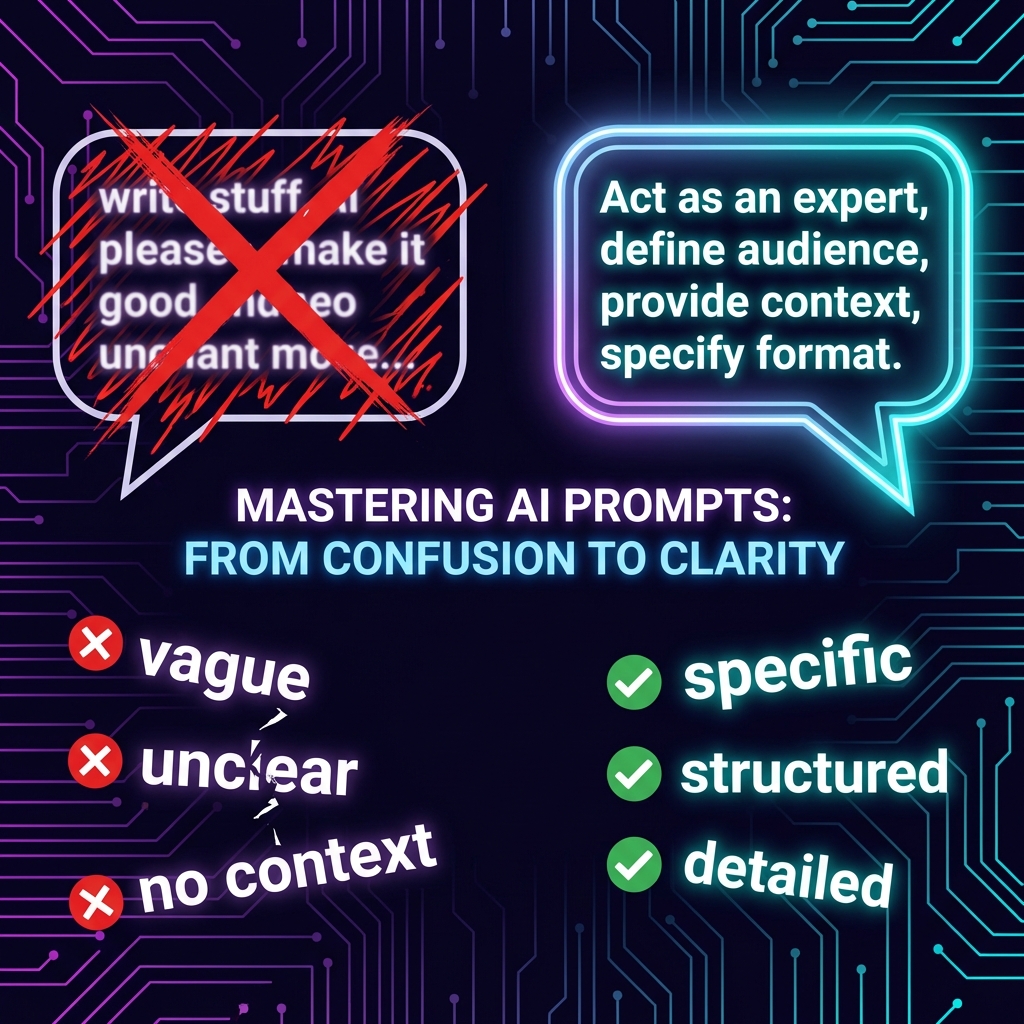
Bad: "Write me a blog post about AI" Better: "Write a 1000-word blog post about how small businesses can use AI for customer service, targeting business owners with no technical background. Include 3 specific examples and keep the tone practical and friendly."
See the difference? The second prompt gives the AI constraints to work within. Constraints aren't limiting—they're focusing.
Mistake #2: Not Giving Context
The AI doesn't know who you are, what you've already tried, or why you're asking. You need to tell it.
"I'm a marketing manager at a B2B software company. My target audience is IT directors at mid-size companies. I need email subject lines for a product launch. We've tried generic benefit-focused subject lines before but they had low open rates. What else might work?"
All that context matters. The AI can only work with what you give it.
Mistake #3: Asking for Too Much at Once
"Write me a complete marketing strategy with budget allocation, channel recommendations, content calendar, and KPIs for a new product launch."
That's like asking a human consultant to do a month of work in one paragraph. Break it down:
- First, describe your product and audience
- Ask for channel recommendations
- Once you've discussed channels, ask about content approach
- Then build out the calendar
- Finally, discuss measurement
Multi-step conversations almost always produce better results than trying to get everything in one prompt.
Mistake #4: Not Iterating
Your first prompt probably won't be perfect. That's fine. But too many people take the first output and walk away disappointed.
Instead: give feedback. "This is good, but the tone is too formal. Can you make it more conversational?" or "These examples are too generic. Can you make them more specific to healthcare?"
The AI can revise. Use that.
The One Trick That Actually Matters
If you remember nothing else: give the AI a role and an audience.
"You're an experienced content strategist. I'm a first-time founder. Help me think through..."
This simple framing produces noticeably better outputs. It tells the AI what expertise to draw on and how to calibrate its responses.
My Prompt Checklist
Before I submit any important prompt, I ask:
- Is it clear what output I want?
- Have I provided relevant context?
- Is this small enough to do well?
- Have I given a role or perspective?
If I can say yes to all four, the prompt usually works. If not, I revise before submitting.