AI TL;DR
Learn how Contextual AI's Agent Composer transforms enterprise RAG systems into autonomous production agents, solving the reliability and deployment challenges that have held back enterprise AI adoption.
Contextual AI Agent Composer: Turning Enterprise RAG into Production-Ready AI Agents
In the race to bring AI into the enterprise, Contextual AI is making a bold claim: the problem holding back AI adoption has never been the models themselves. It's the gap between impressive demos and reliable production systems. Their solution—Agent Composer—represents a new approach to enterprise AI deployment.
The Enterprise RAG Problem
Every enterprise has tried RAG (Retrieval-Augmented Generation). Few have succeeded at scale. The pattern is painfully familiar:
The Demo-to-Production Gap
Demo (Week 1):
- "Look! It answers questions about our documents!"
- 85% accuracy on test questions
- Executives impressed, budget approved
Reality (Month 3):
- Hallucinations on edge cases damage trust
- Retrieval fails on complex queries
- No way to know when the system is wrong
- Integration with existing tools nightmarish
- Scaling costs explode unexpectedly
Outcome (Month 6):
- Project quietly shelved
- "AI isn't ready for our use case"
- Budget redirected elsewhere
Why Standard RAG Fails in Enterprise
| Challenge | Standard RAG | What Enterprises Need |
|---|---|---|
| Accuracy | Good on simple queries | Consistent on all queries |
| Reliability | Works most of the time | Works every time or fails gracefully |
| Integration | API endpoints | Deep workflow integration |
| Observability | Basic logging | Full decision transparency |
| Governance | None | Audit trails, access controls |
| Scalability | Linear cost growth | Predictable, optimized costs |
Enter Contextual AI
Founded by former Anthropic and Google AI researchers, Contextual AI raised significant funding with a specific mission: make enterprise AI actually work in production.
The Contextual AI Philosophy
Their core insight: Enterprise AI needs to be built differently from consumer AI:
Consumer AI:
- Optimize for engagement
- Good enough accuracy acceptable
- Errors are minor annoyances
- One-size-fits-all approach
Enterprise AI:
- Optimize for reliability
- Errors have business consequences
- Transparency is mandatory
- Domain-specific customization required
Agent Composer: The Platform
Agent Composer transforms the enterprise AI development process from months of custom engineering to days of configuration.
Core Components
1. Document Ingestion Engine
Not just chunking and embedding—intelligent document understanding:
Traditional RAG:
PDF → Chunks → Embeddings → Vector Store

Agent Composer:
PDF → Document Understanding
    → Structure Extraction
    → Entity Recognition
    → Relationship Mapping
    → Multi-Level Indexing
    → Query-Optimized Storage
Features:
- Automatic table extraction and interpretation
- Cross-reference resolution
- Section hierarchy preservation
- Multi-document relationship mapping
2. Grounded Retrieval System
Every response comes with verifiable sources:
# Example Agent Composer response structure
{
    "answer": "The maximum coverage is $500,000 per occurrence...",
    "sources": [
        {
            "document": "policy_2024_q1.pdf",
            "page": 47,
            "section": "Section 4.2.1 - Coverage Limits",
            "exact_quote": "Maximum coverage shall not exceed...",
            "confidence": 0.94
        }
    ],
    "reasoning_chain": [
        "Identified query as coverage-related",
        "Retrieved relevant policy documents",
        "Found explicit coverage limit in Section 4.2.1",
        "Verified no contradicting clauses exist"
    ],
    "confidence": 0.91,
    "uncertainty_factors": [
        "Multiple policy versions exist - confirmed latest"
    ]
}
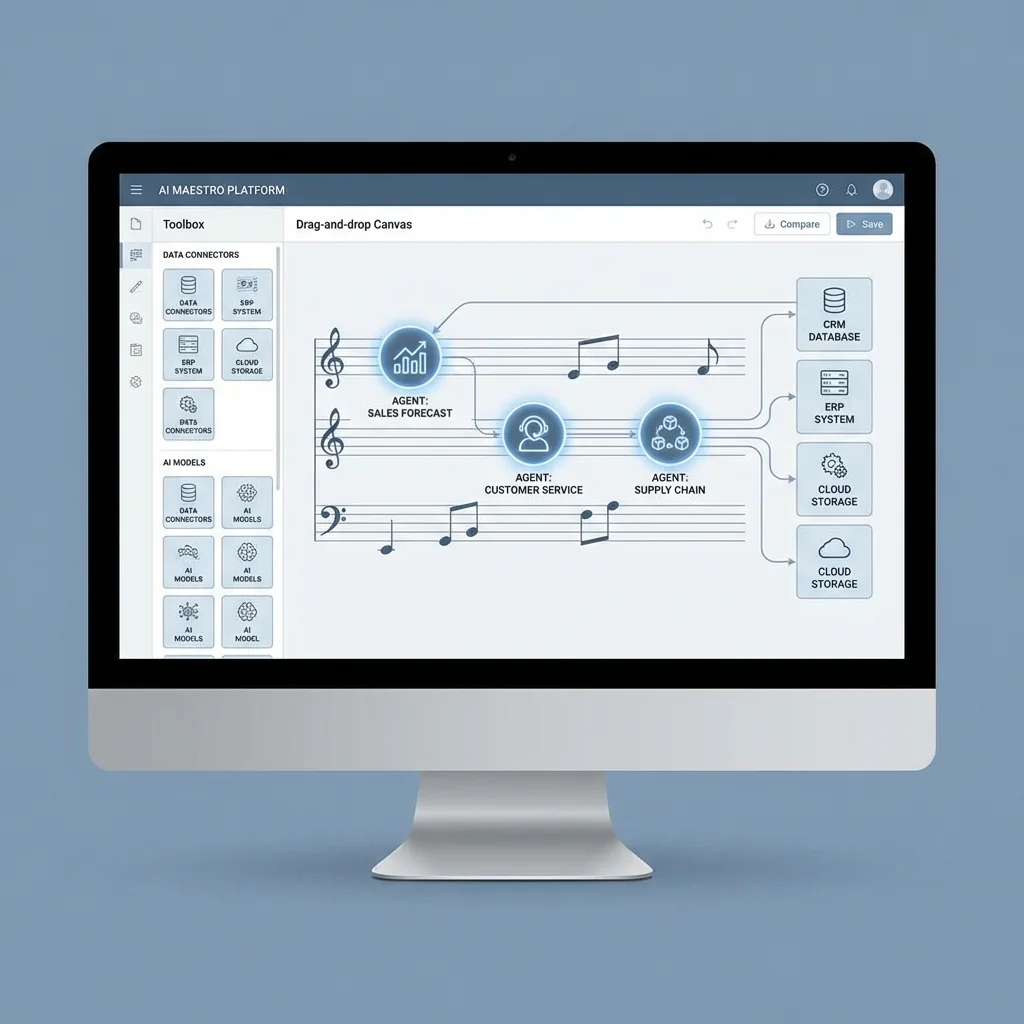
3. Agent Builder Interface
Visual, no-code agent construction:
[Document Sources]     [Tools]           [Guardrails]
├─ Policy Docs         ├─ Calculator     ├─ PII Detection
├─ HR Handbook         ├─ Date Parser    ├─ Topic Limits
├─ Product Specs       ├─ API Connector  ├─ Confidence Threshold
└─ Customer FAQs       └─ Email Sender   └─ Human Escalation

         │                   │                    │
         └───────────────────┼────────────────────┘
                             │
                     [Agent Definition]
                             │
                     [Test & Validate]
                             │
                     [Deploy to Production]
4. Evaluation Framework
Built-in accuracy testing before deployment:
Test Suite Results:
─────────────────────────────────────────
Coverage Questions:      94/100 (94%)
Procedure Queries:       89/100 (89%)
Edge Cases:              78/100 (78%)
Adversarial Tests:       85/100 (85%)
─────────────────────────────────────────
Overall Score:           86.5%
Production Threshold:    85%
Status:                  ✅ READY FOR DEPLOYMENT

Failure Analysis:
- 6 coverage questions failed due to
  ambiguous policy language
- 11 procedure queries needed multi-step
  reasoning improvement
- 22 edge cases identified for human review
From RAG to Agents: The Evolution
Stage 1: Basic RAG (What Most Companies Have)
User Query → Embed → Retrieve → Generate → Response
Limitations:
- Single-shot retrieval
- No multi-step reasoning
- Can't take actions
- No memory across sessions
Stage 2: Advanced RAG (Better But Still Limited)
User Query → Query Rewriting → Multi-Stage Retrieval
           → Reranking → Generation → Response
Improvements:
- Better retrieval accuracy
- Multiple retrieval attempts
- Reranking for relevance
Still Missing:
- Can't execute actions
- No workflow integration
- Limited reasoning depth
Stage 3: Agentic RAG (Agent Composer)
User Query → Intent Classification
           → Tool Selection
           → Multi-Source Retrieval
           → Action Execution (if needed)
           → Verification
           → Response with Citations
           → Memory Update
Full Capabilities:
- Multi-step reasoning
- Tool integration (APIs, databases, calculators)
- Action execution with safety checks
- Persistent context across sessions
- Self-verification before response
Real-World Implementation Examples
Example 1: Insurance Claims Processing
Before Agent Composer:
- Claims adjusters manually search policies
- Average resolution time: 4.2 days
- 12% of claims misclassified
- No audit trail for decisions
After Agent Composer:
Agent: Insurance Claims Analyst

Connected Sources:
- 2,847 policy documents
- Claims history database
- Provider network API
- Coverage calculator

Workflow:
1. Receive claim submission
2. Extract relevant information
3. Retrieve applicable policy sections
4. Calculate coverage amounts
5. Check for exclusions
6. Generate preliminary decision
7. Route to human reviewer with full context

Results:
- Average resolution time: 1.8 days (57% reduction)
- Misclassification rate: 3% (75% reduction)
- Full audit trail for every decision
- Adjusters focus on complex cases only
Example 2: Technical Support Escalation
Before:
- L1 agents search knowledge base manually
- 40% of tickets escalated unnecessarily
- Average handle time: 18 minutes
- Inconsistent answers across agents
After Agent Composer:
Agent: Technical Support Specialist

Connected Sources:
- Product documentation (45,000 pages)
- Known issues database
- Customer history API
- Diagnostic tools

Workflow:
1. Analyze customer inquiry
2. Check customer history for context
3. Search relevant documentation
4. Run diagnostic if applicable
5. Generate solution with steps
6. Verify solution against known issues
7. Provide response with confidence score
8. Escalate if confidence below threshold

Results:
- Unnecessary escalations: 12% (70% reduction)
- Average handle time: 6 minutes (67% reduction)
- Consistent, documented responses
- Automatic escalation with full context
Example 3: Compliance Monitoring
Before:
- Quarterly manual reviews
- Spot-check sampling (2% of documents)
- Findings discovered months late
- Incomplete audit trails
After Agent Composer:
Agent: Compliance Monitor

Connected Sources:
- Regulatory requirements database
- Internal policy documents
- Transaction records
- Communication logs

Continuous Workflow:
1. Monitor incoming documents/transactions
2. Check against regulatory requirements
3. Identify potential violations
4. Assess severity and urgency
5. Generate alerts for human review
6. Track resolution through completion
7. Produce audit reports automatically

Results:
- 100% document coverage (vs. 2%)
- Real-time violation detection
- Complete audit trail
- Proactive rather than reactive compliance
Technical Architecture
Deployment Options
Cloud-Hosted (Contextual AI Managed):
- Fastest time to value
- Fully managed infrastructure
- Automatic updates and scaling
- Data processed in secure environment
Private Cloud (Customer VPC):
- Data never leaves customer environment
- Customer controls infrastructure
- Contextual AI provides software
- Higher setup complexity
On-Premises:
- Complete data sovereignty
- Air-gapped environment support
- Maximum security control
- Requires dedicated infrastructure
Integration Architecture
┌─────────────────────────────────────────────────────────┐
│                    Agent Composer                        │
├─────────────────────────────────────────────────────────┤
│  ┌─────────┐  ┌─────────┐  ┌─────────┐  ┌─────────┐   │
│  │ Agent 1 │  │ Agent 2 │  │ Agent 3 │  │ Agent N │   │
│  └────┬────┘  └────┬────┘  └────┬────┘  └────┬────┘   │
│       └────────────┼────────────┼────────────┘         │
│                    ▼                                    │
│            ┌──────────────┐                            │
│            │ Orchestrator │                            │
│            └──────┬───────┘                            │
├───────────────────┼─────────────────────────────────────┤
│    ┌──────────────┼──────────────┐                     │
│    ▼              ▼              ▼                     │
│ ┌──────┐    ┌──────────┐   ┌─────────┐                │
│ │ RAG  │    │  Tools   │   │Guardrails│               │
│ │Engine│    │ Registry │   │ Engine  │                │
│ └──────┘    └──────────┘   └─────────┘                │
├─────────────────────────────────────────────────────────┤
│              External Integrations                       │
│  ┌────────┐ ┌────────┐ ┌────────┐ ┌────────┐          │
│  │Salesforce│ │ServiceNow│ │  SAP  │ │ Custom │         │
│  └────────┘ └────────┘ └────────┘ └────────┘          │
└─────────────────────────────────────────────────────────┘
API Integration
from contextual_ai import AgentComposer, Agent

# Initialize connection
composer = AgentComposer(
    api_key="your-api-key",
    environment="production"
)

# Load pre-built agent
support_agent = composer.get_agent("technical-support-v2")

# Execute query
response = support_agent.run(
    query="Customer reports intermittent connection issues",
    context={
        "customer_id": "CUST-12345",
        "product": "Enterprise Suite",
        "priority": "high"
    }
)

# Response includes full transparency
print(response.answer)
print(response.sources)
print(response.actions_taken)
print(response.confidence)
print(response.escalation_needed)
Governance and Compliance Features
Audit Trail
Every agent decision is logged:
{
    "timestamp": "2026-02-01T14:23:45Z",
    "agent": "claims-processor-v3",
    "query_id": "QRY-789456",
    "user": "adjuster@company.com",
    "input_hash": "sha256:abc123...",
    "decision": "approve_claim",
    "confidence": 0.94,
    "sources_consulted": [
        "policy-2024-01.pdf#page=47",
        "claims-history-db:claim-456789"
    ],
    "reasoning_steps": 12,
    "tools_invoked": ["coverage-calculator", "fraud-check"],
    "guardrails_applied": ["pii-redaction", "bias-check"],
    "human_review_required": false,
    "response_time_ms": 2340
}
Role-Based Access Control
Admin Role:
├── Create/modify agents
├── Access all audit logs
├── Configure guardrails
└── Manage user permissions

Developer Role:
├── Create agents in sandbox
├── View own agent logs
├── Configure data sources
└── Cannot deploy to production

Operator Role:
├── Use deployed agents
├── View relevant logs
├── Cannot modify agents
└── Cannot access raw data

Auditor Role:
├── Read-only access to all logs
├── Cannot use agents
├── Export audit reports
└── Cannot modify anything
Compliance Certifications
- SOC 2 Type II
- HIPAA (Healthcare deployments)
- GDPR compliant
- FedRAMP (Government deployments)
- ISO 27001
Cost Structure
Pricing Model
Platform Fee: Based on deployment type
- Cloud-hosted: Starting at $5,000/month
- Private cloud: Starting at $15,000/month
- On-premises: Custom pricing
Usage-Based:
- Per query charges (volume discounts available)
- Per document processed
- Per tool invocation
ROI Calculation Example
Insurance Company Case Study:

Before Agent Composer:
- Claims processing staff: 50 adjusters
- Average salary + benefits: $75,000
- Annual labor cost: $3,750,000
- Average resolution time: 4.2 days

After Agent Composer:
- Claims processing staff: 25 adjusters (50% reduction)
- Annual labor cost: $1,875,000
- Agent Composer cost: $180,000/year
- Average resolution time: 1.8 days

Annual Savings: $1,695,000
ROI: 942%
Payback Period: 6 weeks
Getting Started
Implementation Timeline
Week 1-2: Discovery
- Document inventory and assessment
- Use case prioritization
- Integration requirements gathering
- Security and compliance review
Week 3-4: Pilot Setup
- Initial agent configuration
- Document ingestion
- Integration with one system
- Testing with limited users
Week 5-8: Pilot Operation
- Real-world usage
- Performance monitoring
- Accuracy measurement
- User feedback collection
Week 9-12: Production Rollout
- Full integration deployment
- User training
- Monitoring setup
- Ongoing optimization
Success Factors
Do:
- Start with a focused use case
- Measure baseline metrics before deployment
- Include end users in testing
- Plan for edge cases and escalations
- Establish clear success criteria
Don't:
- Try to solve everything at once
- Skip the pilot phase
- Ignore user feedback
- Underestimate change management
- Expect 100% automation immediately
The Future of Enterprise AI
Agent Composer represents where enterprise AI is heading:
From: Point solutions that work in demos To: Reliable systems that work in production
From: AI as a novelty To: AI as infrastructure
From: Technical experiments To: Business-critical workflows
The companies that figure out enterprise AI first will have significant competitive advantages. Agent Composer is betting that the path forward isn't better models—it's better systems for deploying, managing, and trusting AI in production.
The gap between AI demos and production systems has held back enterprise adoption for years. Contextual AI's Agent Composer represents a new approach: treating enterprise AI as an infrastructure problem, not just a model problem. For organizations ready to move beyond experimentation, it offers a path to AI that actually works.