AI TL;DR
A comprehensive analysis of Apple's rumored AI wearable pin, including leaked specifications, Siri LLM integration timelines, comparison with Humane Pin, and what it means for the future of ambient computing.
When the Humane AI Pin launched in 2024, it promised a screenless future—a world where AI would whisper answers into your ear and project information onto your palm. It flopped spectacularly. Battery life measured in hours, not days. Overheating issues. A $699 price tag for a device that couldn't reliably answer questions.
But Apple doesn't ship first. Apple ships last and best.
Reports from Bloomberg's Mark Gurman, supply chain analysts, and patent filings suggest that Cupertino is deep in development of its own wearable AI device—tentatively dubbed the "Apple AI Pin" or linked to the internal project code "Atlas." Unlike its predecessors, Apple plans to solve the fundamental physics problems of AI wearables using its greatest assets: custom silicon, the Apple ecosystem, and the upcoming Siri LLM overhaul.
This comprehensive analysis covers everything we know about Apple's AI wearable, from leaked hardware specifications to the strategic timeline for Siri 2.0.
The Hardware: What We Know
Leaks describe a device that feels more like premium jewelry than a prototype gadget—quintessentially Apple.
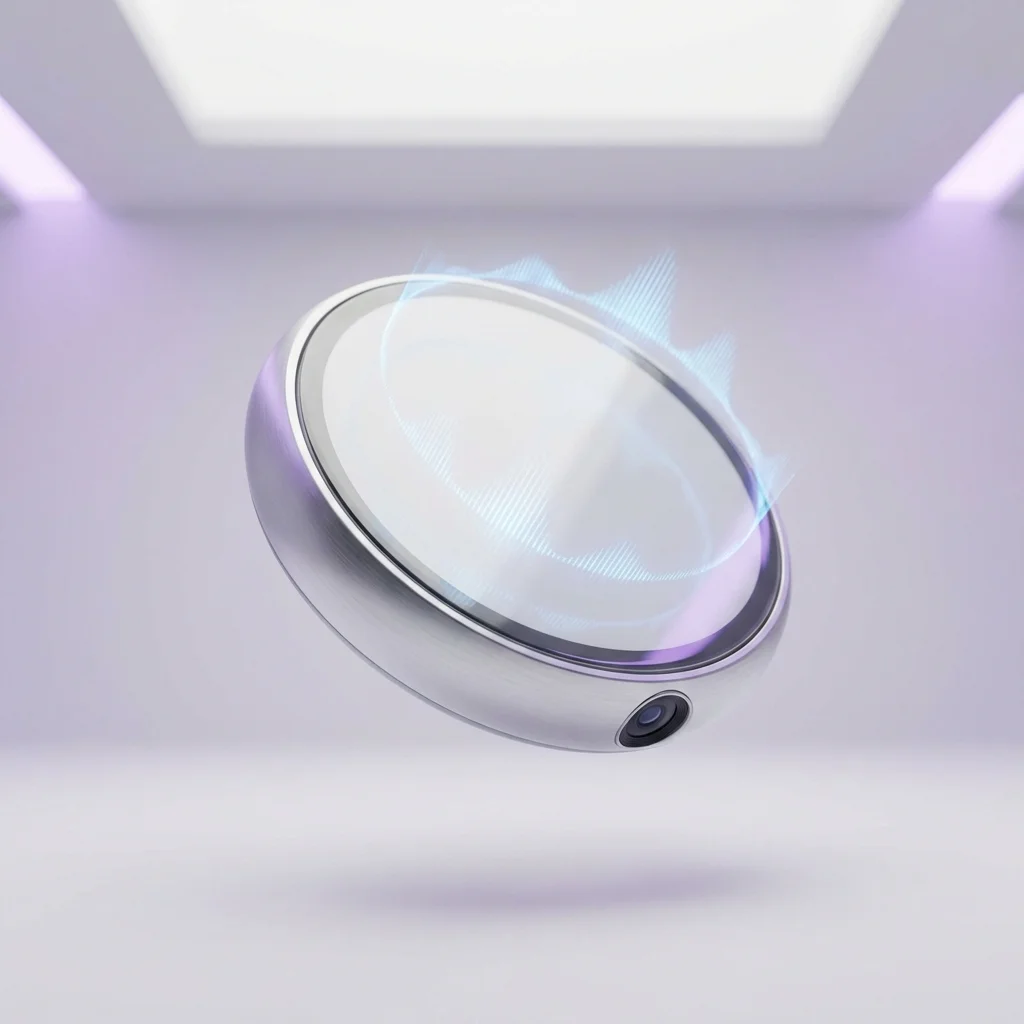
Form Factor: The "AirTag Pro"
Multiple sources, including reports from The Information, describe the device as:
| Specification | Rumored Details |
|---|---|
| Shape | Thin, flat, circular disc |
| Size | Similar to AirTag, slightly thicker |
| Materials | Brushed aluminum casing + curved glass front |
| Weight | Estimated < 30g (lighter than AirPods Pro case) |
| Attachment | Refined MagSafe magnetic system for clothing |
Design Philosophy:
┌─────────────────────────────────────────────────────────────┐
│              APPLE AI PIN (RUMORED DESIGN)                  │
├─────────────────────────────────────────────────────────────┤
│                                                             │
│                    ┌─────────────┐                          │
│                   /               \                         │
│                  │   ◉     ◉     │  ← Dual Cameras          │
│                  │               │                          │
│                  │   ◌ ◌ ◌      │  ← 3 Microphones          │
│                  │               │                          │
│                  │       ●       │  ← Speaker               │
│                   \             /                           │
│                    └─────────────┘                          │
│                          │                                  │
│                    [Physical Button]                        │
│                                                             │
│  Diameter: ~1.5 inches | Materials: Aluminum + Glass        │
└─────────────────────────────────────────────────────────────┘
The Sensor Array: A Perception Engine
This isn't just a microphone with AI—it's a comprehensive environmental sensing platform.
Camera System:
| Camera | Specification | Purpose |
|---|---|---|
| Main Lens | 12MP (estimated) | High-res photo/video, object recognition |
| Ultra-Wide | 120° FoV | Peripheral context, hand gesture detection |
Audio System:
| Component | Specification | Purpose |
|---|---|---|
| Microphones | 3x beamforming array | Voice isolation in noisy environments |
| Speaker | Miniature driver | Private audio feedback |
| Haptics | Taptic Engine variant | Silent notifications, scroll feedback |
Battery Technology: The Make-or-Break Feature
The Humane Pin failed primarily due to power consumption. AI inference is computationally expensive, and miniaturized batteries couldn't keep up.
Apple's rumored solutions:
1. Stacked Battery Technology First debuted in iPhone 16 Pro, this allows higher energy density in the same footprint. The Pin would use a purpose-built variant optimized for always-on sensing.
2. Custom Low-Power Silicon Apple is reportedly designing an "S-series perception chip" specifically for the Pin—similar to the S9 in Apple Watch but optimized for AI inference power efficiency.
3. Power Management Strategy:
┌─────────────────────────────────────────────────────────────┐
│              POWER MANAGEMENT ARCHITECTURE                  │
├─────────────────────────────────────────────────────────────┤
│                                                             │
│  Always-On Mode (Listening)                                 │
│  ├─ Ultra-low power audio DSP                               │
│  ├─ "Hey Siri" hotword detection only                       │
│  └─ Power draw: ~5mW                                        │
│                                                             │
│  Active Mode (Processing)                                   │
│  ├─ Full Neural Engine engagement                           │
│  ├─ Camera active for context                               │
│  └─ Power draw: ~500mW                                      │
│                                                             │
│  Cloud Offload Mode (Complex Queries)                       │
│  ├─ Radio active for Private Cloud Compute                  │
│  ├─ Local processing minimal                                │
│  └─ Power draw: ~800mW                                      │
│                                                             │
└─────────────────────────────────────────────────────────────┘
Estimated Battery Life: 12-16 hours of mixed use (vs. Humane's 4-6 hours).
The Brain: Siri 2.0 and LLM Integration
Hardware without software is a paperweight. The Apple AI Pin is the vessel for Siri 2.0—the most significant upgrade to Apple's voice assistant since its 2011 debut.
The Current State of Siri
Today's Siri is embarrassingly limited compared to ChatGPT or Claude:
| Capability | Current Siri | ChatGPT | Target Siri LLM |
|---|---|---|---|
| Multi-turn conversations | ❌ Resets context | ✅ | ✅ |
| Complex reasoning | ❌ | ✅ | ✅ |
| App integration | ⚠️ Limited | ❌ | ✅ Deep |
| On-device processing | ✅ | ❌ | ✅ |
| World knowledge cutoff | 2023 | 2024+ | Real-time |
The Siri LLM Architecture
Apple is taking a hybrid approach to AI:
1. On-Device Processing (Apple Intelligence) For privacy-sensitive queries, Siri will use local models running on Apple Silicon:
- Personal context (calendar, messages, habits)
- Basic task execution
- Privacy-preserving embeddings
2. Private Cloud Compute For complex reasoning requiring larger models:
- Queries processed on Apple-controlled servers
- No data retention after processing
- End-to-end encryption
3. Gemini Partnership (Rumored) For world knowledge and advanced reasoning:
- Fine-tuned version of Google Gemini
- Accessed through Private Cloud Compute
- Apple retains data governance
Siri LLM Timeline
| Date | Milestone | Source |
|---|---|---|
| Feb 2026 | Gemini-powered Siri debuts | Mark Gurman |
| June 2026 | iOS 26.4 with "conversational" Siri | MacRumors |
| Fall 2026 | Full LLM Siri in iOS 27 beta | Bloomberg |
| Spring 2027 | AI Pin launch (if approved) | The Information |
Capabilities: What the AI Pin Could Do
If the rumors hold, the Apple AI Pin would enable use cases impossible on any existing device.
1. Multimodal Vision Queries
Scenario: You're at a farmer's market.
You: "Hey Siri, is this avocado ripe?"
Pin: *Activates camera, analyzes color/texture*
Siri: "This one looks about 2 days from optimal ripeness.
       The one to its left looks ready to eat today."
2. Contextual Memory
Scenario: You just finished a networking event.
You: "Hey Siri, remind me of the name of the person
      I spoke with who works at the AI startup."
Pin: *Cross-references facial recognition + conversation context*
Siri: "That was Sarah Chen from Anthropic.
       She mentioned being interested in AI safety research."
3. Proactive Assistance
Scenario: You're running late for a meeting.
Pin: *Detects unusual rushing behavior, checks calendar*
Siri: "Your 3pm meeting is in 10 minutes, but traffic shows
       a 15-minute delay. Want me to message the attendees
       that you'll be 5 minutes late?"
4. Action Agents
Scenario: You're at a restaurant and want to split the bill.
You: "Hey Siri, pay for my share of this dinner."
Siri: *Accesses camera to read receipt, calculates share*
Siri: "Your share including tip is $47.80.
       Sending via Apple Pay to [Restaurant]. Confirm?"
The Competition: Apple vs. The AI Wearable Market
Apple isn't entering an empty market. Here's how the rumored Pin compares:
Competitive Landscape
| Device | Status | Price | Key Weakness |
|---|---|---|---|
| Humane AI Pin | Failed (2024) | $699 + $24/mo | Battery, accuracy, heat |
| OpenAI Wearable | Rumored 2026 | Unknown | No ecosystem |
| Meta Ray-Ban | Shipping | $299+ | No screen, limited AI |
| Apple AI Pin | Rumored 2027 | $499-699 (est.) | TBD |
Apple's Strategic Advantages
1. Ecosystem Lock-In The Pin won't be a standalone device. It will integrate with:
- iPhone (heavy processing offload)
- Apple Watch (health data context)
- AirPods (audio output)
- HomeKit (smart home control)
2. Privacy Engineering Apple's biggest advantage is trust. Their rumored solutions for camera privacy:
┌─────────────────────────────────────────────────────────────┐
│              PRIVACY ARCHITECTURE                           │
├─────────────────────────────────────────────────────────────┤
│                                                             │
│  Hardware Privacy LED                                       │
│  └─ Physically connected to camera power                    │
│  └─ Cannot be disabled by software                          │
│  └─ Glows when camera is active                             │
│                                                             │
│  On-Device Face Obfuscation                                 │
│  └─ Faces of non-registered users are blurred               │
│  └─ Before data leaves the device                           │
│  └─ Processed locally on Neural Engine                      │
│                                                             │
│  Secure Enclave Storage                                     │
│  └─ All personal data encrypted at rest                     │
│  └─ Biometric authentication required                       │
│                                                             │
└─────────────────────────────────────────────────────────────┘
3. Distribution and Support Apple has 500+ retail stores globally. Humane had none. When hardware fails, Apple can replace it the same day.
Why 2027? Understanding the Timeline
If the technology exists, why wait nearly two years?
1. The "Hallucination" Problem
Apple is terrified of brand damage. Unlike startup "Humane," Apple cannot afford a device that confidently lies to users. They are spending 2025-2026 refining the "Siri LLM" on hundreds of millions of iPhones to reach:
- 99%+ accuracy on factual queries
- Graceful acknowledgment of uncertainty ("I'm not sure, but...")
- Zero-tolerance for harmful outputs
2. Social Acceptance Engineering
A camera on your chest is still socially taboo in many contexts. Apple is reportedly running extensive:
- User research studies on acceptability
- Design iterations for "less conspicuous" form factors
- Enterprise partnerships for workplace acceptability
3. Supply Chain Optimization
Apple doesn't launch products at small scale. They need to manufacture millions of units for launch day. The specialized components (beamforming mics, mini Taptic Engine, stacked battery) require 18+ months of supply chain preparation.
4. Regulatory Preparation
Wearable cameras face regulatory scrutiny in:
- EU (GDPR implications)
- UK (surveillance concerns)
- China (data localization)
Apple is engaging with regulators preemptively to ensure smooth global launch.
Is This an "iPhone Killer"?
No. And Apple isn't positioning it that way.
The "Satellite Device" Strategy
Analyst Ming-Chi Kuo suggests the Pin will rely on the Private Cloud Compute of your paired iPhone for heavy lifting:
┌─────────────────────────────────────────────────────────────┐
│              DEVICE RELATIONSHIP                            │
├─────────────────────────────────────────────────────────────┤
│                                                             │
│       ┌─────────┐         ┌──────────────┐                  │
│       │ AI Pin  │ ◄─────► │   iPhone     │                  │
│       └─────────┘   BT    └──────────────┘                  │
│           │                     │                           │
│           │                     │                           │
│           ▼                     ▼                           │
│   ┌───────────────┐    ┌─────────────────┐                  │
│   │  Light Tasks  │    │  Heavy Compute  │                  │
│   │  - Hey Siri   │    │  - LLM queries  │                  │
│   │  - Quick info │    │  - Image recog  │                  │
│   │  - Calls/SMS  │    │  - App actions  │                  │
│   └───────────────┘    └─────────────────┘                  │
│                                                             │
└─────────────────────────────────────────────────────────────┘
Use Case: You leave your phone in your bag or at home. The Pin handles calls, texts, and quick questions via LTE/5G. For anything complex, it seamlessly hands off to your iPhone.
Goal: To reduce screen time while keeping you connected to the world's intelligence. It's the Anti-Phone.
Financial Projections and Market Impact
Projected Pricing
| Model | Estimated Price | Included |
|---|---|---|
| AI Pin | $499 | Basic functionality |
| AI Pin + Cellular | $699 | LTE/5G connectivity |
| AI Pin Pro (if exists) | $899 | Enhanced sensors |
Notable: No subscription required. Bundled with Apple One or iCloud+.
Market Opportunity
| Metric | Projection |
|---|---|
| Addressable Market | 1.2B iPhone users globally |
| Initial Adoption (Year 1) | 5-10M units |
| Mature Adoption (Year 3) | 50-80M units |
| Revenue Potential | $25-50B annually |
Impact on Apple's Business
| Segment | Impact |
|---|---|
| Wearables | Expands from Watch/AirPods to ambient computing |
| Services | Drives iCloud+/Apple One subscriptions |
| iPhone | Reinforces ecosystem lock-in |
| Privacy | Cements "privacy company" positioning |
Risk Assessment
Likelihood of Launch
Based on current evidence:
| Factor | Assessment |
|---|---|
| Hardware development | 70% complete (estimated) |
| Siri LLM readiness | 60% complete (timeline slipping) |
| Regulatory approval | Unknown |
| Consumer demand | Unproven |
Overall Launch Probability: 60%
The project could still be canceled if:
- Siri LLM improvements underperform
- Consumer research shows social rejection
- A competitor (OpenAI) fails catastrophically in the category
What Could Go Wrong
- Humane 2.0 Effect: Apple ship and it still doesn't work reliably
- Privacy Backlash: Public rejects chest-mounted cameras
- Cannibalization: Hurts Apple Watch sales without compensating revenue
- Regulatory Block: EU or China restricts camera wearables
Conclusion: The "Walkman" Moment for AI?
If rumors hold true, Apple isn't trying to replace the smartphone computer. They're trying to invent the Ambient Computer—a device that fades into the background while keeping you connected to intelligence.
The Walkman didn't replace the stereo; it made music portable. The iPhone didn't replace the computer; it made computing personal. The AI Pin wouldn't replace the iPhone; it would make AI ambient.
For that vision to succeed, Apple needs:
- ✅ Hardware miniaturization (on track)
- ⏳ Siri LLM parity with ChatGPT (in progress)
- ⏳ Social acceptance of wearable cameras (uncertain)
- ⏳ Compelling use cases (TBD)
We'll be tracking patents, supply chain reports, and Mark Gurman's inbox closely. For now, keep your AirTags close—they might be the blueprint for the future.
Want to stay updated on Apple AI developments? Check our guides on Apple Intelligence and Siri vs ChatGPT.
Analysis reflects information available as of February 2026. Apple has not officially confirmed these products.