AI TL;DR
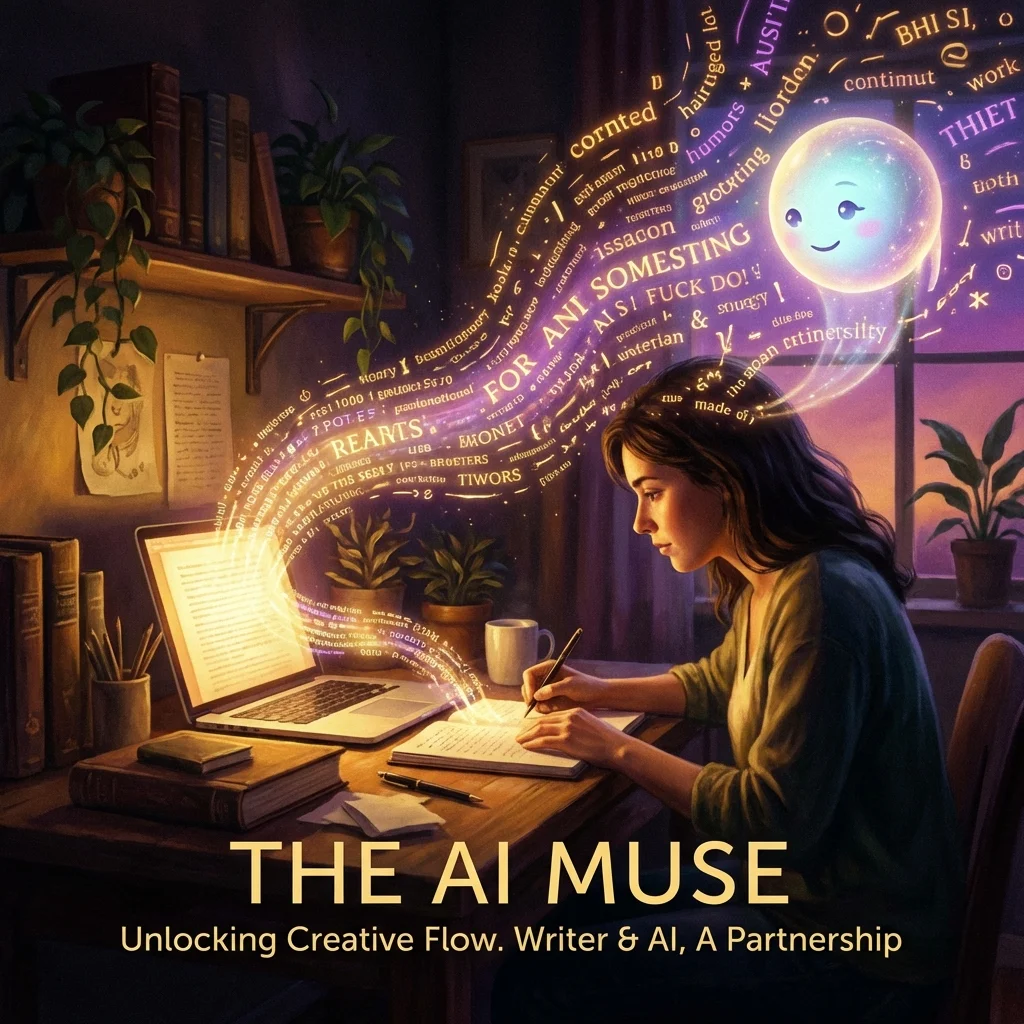
AI can help you write faster, but can it help you write better? Here's how professional writers are using AI the right way. This article explores key trends in AI, offering actionable insights and prompts to enhance your workflow. Read on to master these new tools.
AI for Writers: How to Use ChatGPT Without Losing Your Voice
Here's the fear every writer has about AI: "If I use it, my writing will sound like everyone else's."
That fear is valid. AI-generated content does have a recognizable flavor—that slightly generic, overly comprehensive, sometimes robotic tone that screams "a machine wrote this."
But here's the thing: the writers who are using AI effectively aren't letting it write for them. They're using it to write better.
Let me show you how.
The Wrong Way to Use AI for Writing
First, let's acknowledge what doesn't work:
Prompt: "Write me a blog post about productivity tips."
Result: Generic content that sounds like everything else on the internet.
This approach treats AI as a replacement for thinking. It produces content, sure—but content that has no personality, no unique perspective, no you.
If you're doing this, you're competing against literally everyone else using the same approach. That's a race to the bottom.
The Right Way: AI as Collaborator, Not Creator
Good writers use AI the way they use other tools—to enhance their work, not replace it.
Here's my framework:
1. Use AI for the Blank Page Problem
The hardest part of writing is often starting. AI is excellent at giving you something to react to.
Better prompt: "I want to write about productivity tips. Give me 10 unconventional angles that most articles don't cover."
Now you have ideas to evaluate. Pick the one that resonates with you, the one you have opinions about. That's where your voice comes from.
2. Use AI for Structure, Not Substance
AI is great at organizing thoughts. Your job is to provide the thoughts.
Better prompt: "I want to write about how remote work has affected my mental health. Here are my scattered notes: [paste notes]. Help me organize these into a logical article structure."
The ideas are yours. The organization is AI-assisted. The final writing is still yours.
3. Use AI for Editing, Not First Drafts
This is where AI really shines. Write your rough draft with all your personality and quirks, then use AI to polish it.
Editing prompts that work:
- "Edit this for clarity without changing the tone"
- "Identify sentences that are too long or confusing"
- "Suggest stronger verbs to replace weak ones"
- "Point out any clichés I should replace"
Your voice stays intact because the ideas and phrasing are yours. AI just helps you execute them better.
4. Use AI to Push Past Clichés
We all fall into familiar patterns. AI can help identify them.
Prompt: "I've written this paragraph. Identify any clichés or overused phrases and suggest fresher alternatives."
This is using AI's pattern recognition to improve originality, not diminish it.
Specific AI Writing Workflows That Work
Here's how I actually use AI in my writing process:
Research Phase
Task: Understanding a topic quickly
How: "Summarize the key arguments in the debate about [topic]. Include perspectives I might not have considered."
This gives me a foundation, but my take on the issue is still mine.
Outline Phase
Task: Structuring an article
How: I write bullet points of my main ideas, then ask: "Suggest a logical order for these points and identify any gaps in my argument."
Draft Phase
Task: Writing the actual content
How: I write the draft myself. This is where voice happens. AI gets minimal involvement here.
Editing Phase
Task: Improving the draft
How: Multiple passes:
- "Check this for grammar and typos"
- "Identify paragraphs that feel weak or unclear"
- "Suggest cuts—what's redundant?"
Headline Phase
Task: Creating compelling titles
How: "Here's my article summary. Give me 15 headline options ranging from straightforward to creative."
I always end up modifying AI suggestions rather than using them directly.
The Claude Advantage for Writers
Quick note: while ChatGPT works fine for writing, I've found Claude to be superior for most writing tasks. The tone is more natural, it's better at matching your style, and it handles nuance better.
If you're serious about using AI for writing, give Claude a try.
Protecting Your Voice
Here's my rule: AI should never write anything I couldn't explain or stand behind.
If AI generates a sentence, I ask myself: "Would I have written this?" If not, I rewrite it.
Your voice is:
- Your opinions
- Your experiences
- Your analogies and examples
- Your rhythm and cadence
- The things you choose to emphasize
AI doesn't have any of these. It can only remix what others have written. Your unique perspective is what makes your writing valuable.
When NOT to Use AI
There are times I deliberately avoid AI:
- Personal essays: The whole point is your authentic voice
- First drafts of creative work: You need to discover what you think before refining it
- When you're blocked conceptually: If you don't know what to say, AI can't help—it'll just give you average ideas
- Anything requiring specialized expertise: AI can be confidently wrong
A Practical Example
Let me show you my actual workflow with a recent piece:
Step 1: I had an idea about why most productivity advice is useless.
Step 2: I asked Claude: "I'm arguing that most productivity advice fails because it ignores individual differences in energy and motivation. What counterarguments should I address?"
Step 3: I wrote a rough outline with my key points.
Step 4: I wrote the draft myself, including my own examples and experiences.
Step 5: I asked: "Edit this for clarity. Flag anything that feels generic."
Step 6: Claude identified two paragraphs that were "serviceable but lacking personality." I rewrote those with stronger opinions.
Final result: An article that's faster to produce than without AI, but still sounds like me.
The Bottom Line
AI won't make you a better writer by thinking for you. But it can make you more efficient at the parts of writing that don't require creativity.
Use AI for:
- ✅ Brainstorming and research
- ✅ Structure and organization
- ✅ Editing and polish
- ✅ Generating options to react to
Don't use AI for:
- ❌ Having opinions
- ❌ Personal experiences
- ❌ Creative breakthroughs
- ❌ Your actual voice
The writers who will thrive in the AI era are those who combine human creativity with AI efficiency. Your job isn't being replaced—it's evolving.
Embrace the tools. Guard your voice. That's the formula.